

Key Takeaways
The best SPC flooring Brisbane homeowners choose is usually the option that balances water resistance, stability, appearance, and installation quality rather than simply choosing the thickest or most expensive product.
-
Check the core, wear layer, backing, and slip rating together.
-
Choose plank size and color with the room’s proportions in mind.
-
Compare full project costs, not just the advertised square-meter price.
-
Prepare the subfloor carefully before installation begins.
-
Use a supplier and installer who can explain the product clearly.
Understand what SPC flooring is and why it suits Brisbane homes
SPC flooring is a rigid floating floor made with a stone-plastic composite core and a decorative surface designed to resemble timber or tile. It has become popular in Australian homes because it offers a hard-wearing surface with strong resistance to everyday moisture. For Brisbane renovations, though, the product still needs to be matched to the room, subfloor, and installation conditions.
How SPC flooring is constructed
Most SPC planks have several layers: a protective wear layer, printed decorative film, rigid composite core, and an attached acoustic backing or separate underlay. The core gives the plank much of its firmness, while the surface finish provides the visible grain, color, and texture. A click-lock edge usually allows the floor to float above the prepared subfloor rather than being glued across its full area.
The construction matters because each layer contributes something different. A convincing print cannot compensate for a weak locking profile, and a thick core does not automatically mean a better surface finish. Ask to see a cross-section or technical sheet so you can compare the complete product rather than relying on thickness alone.
Waterproofing, durability, and dimensional stability
SPC flooring is generally designed to resist water passing through the plank itself, which makes it useful in areas where occasional splashes are likely. That does not make the whole floor assembly immune to water damage: leaks beneath the floor, standing water at the edges, and damp subfloors can still create problems.
Its rigid core can also help limit movement caused by ordinary changes in temperature. Even so, correct expansion gaps, a sound subfloor, and manufacturer-approved installation remain essential. The floor is only as dependable as the conditions below and around it.
SPC flooring compared with laminate, vinyl, and hybrid flooring
Laminate usually has a wood-based core and can be more vulnerable to swelling if water reaches its edges or joints. Flexible vinyl can be comfortable and practical, but it may show subfloor imperfections more readily. Hybrid flooring is a broad retail term that can include rigid-core products, so the label alone does not tell you whether the core is SPC.
A useful comparison looks at the actual specification: core composition, total thickness, wear layer, backing, locking system, warranty terms, and installation requirements. A hybrid flooring guide for Australian homes can provide another starting point, but local conditions and the individual product specification should guide the final decision.
Brisbane climate factors to consider
Brisbane’s warm weather, bright sun, humidity, and occasional heavy rain all affect flooring choices. Air conditioning can create a different indoor environment from an open, naturally ventilated room, while large windows may expose one section of floor to stronger sunlight than another.
Before ordering, consider whether the room has direct afternoon sun, whether doors open onto wet outdoor areas, and whether the subfloor has had enough time to dry. These simple observations often matter more than a small difference in decorative texture.
Assess the performance features that matter most
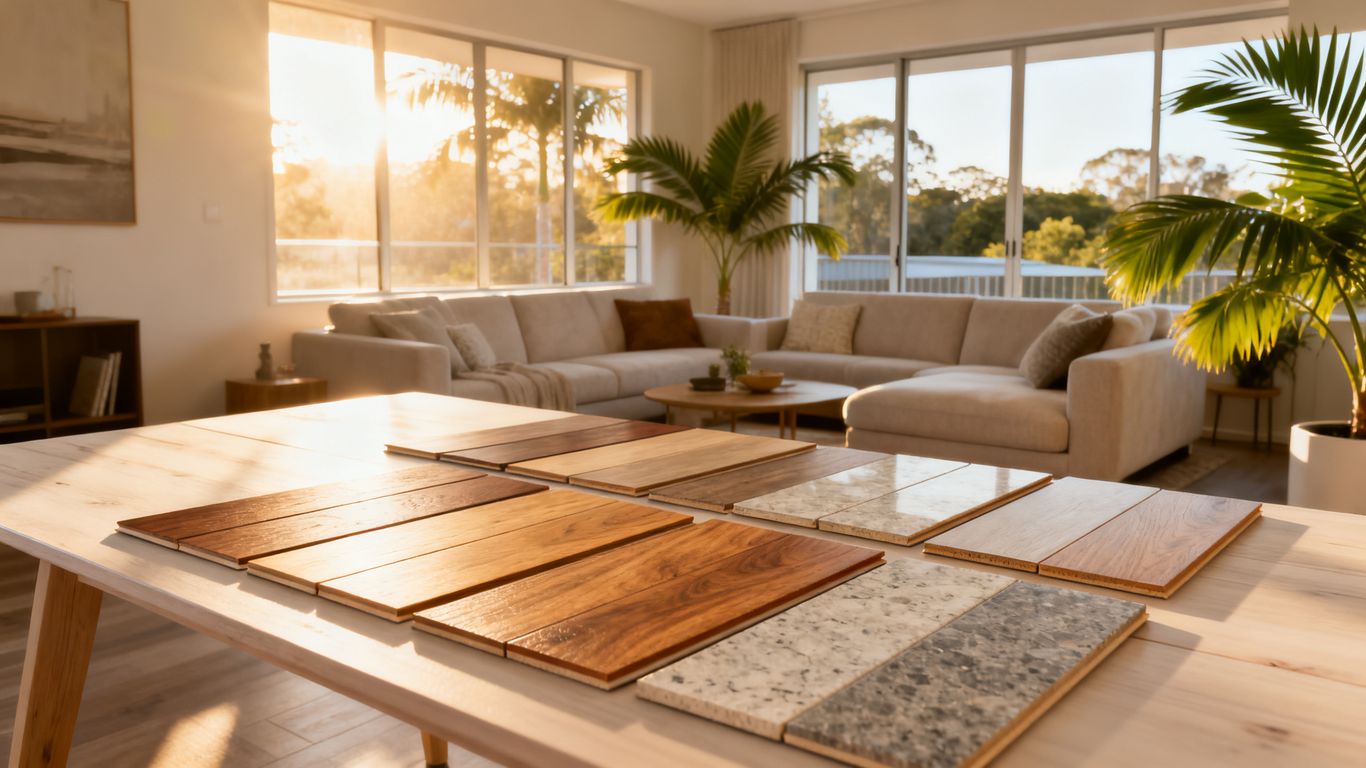
Product samples are useful, but a small square of flooring cannot reveal every performance detail. Read the technical information alongside the sample and consider how the room will actually be used. Pets, children, furniture movement, wet entry points, and strong sunlight all place different demands on the floor.
A good specification should be clear enough for you to compare like with like. If a salesperson cannot explain a rating or leaves key measurements out of the quote, pause before treating the product as equivalent to a better-documented alternative.
Wear layers and scratch resistance
The wear layer is the transparent surface protection above the printed design. Its thickness and composition influence resistance to scuffing, abrasion, and ordinary household wear, although a thicker layer is not the only measure of quality. Surface texture, finish, and the quality of the print also affect how marks appear over time.
Look for a stated wear-layer measurement and ask what residential or commercial classification applies. Moveable furniture, grit carried in from outside, and sharp pet claws can all create scratches, so practical protection still matters even with a strong specification.
Core thickness, acoustic backing, and underlay
A thicker plank can feel more substantial and may offer useful support, but the result depends on the whole system. Acoustic backing can reduce the hard sound associated with floating floors, while a separate underlay may be required for a particular subfloor or acoustic target.
Do not automatically add another underlay beneath a product with attached backing. It can affect the locking joints and may conflict with the installation instructions. The right question is whether the complete floor assembly suits the room, not whether one component has the largest number.
Slip resistance and safety ratings
Slip resistance deserves attention in kitchens, laundries, entrances, and homes where water may be tracked indoors. Ask for the relevant test result or classification and check whether it applies to the actual surface finish being supplied. A heavily textured surface can offer grip, but it may also require more careful cleaning.
Safety also includes edge transitions and changes in level. A floor that performs well in a laboratory can still become a trip hazard if adjoining surfaces are poorly aligned. Have the installer explain how doorways, stairs, and wet-area thresholds will be finished.
UV protection and colour stability
Direct sun can gradually change the appearance of many flooring materials. UV-resistant coatings and stable decorative films can help, but they do not remove the need for sensible window coverings in rooms with strong exposure.
Ask whether the warranty addresses color change and whether samples can be viewed in natural light. Place a sample near the window for several hours, then compare it with one kept farther inside; the exercise will not predict years of aging, but it can reveal how the finish looks under Brisbane’s bright conditions.
Choose the right SPC flooring style for your space
The visual side of flooring deserves as much care as the technical side. A design that looks appealing in a showroom may feel too busy across a large open-plan room, while a quiet color can make a smaller space seem calmer and more spacious. Take samples home whenever possible and view them beside your cabinetry, walls, and natural light.
The most successful choices usually connect the floor to the architecture rather than chasing a short-lived trend. Think about how the flooring will meet existing timber, stone, carpet, and painted surfaces.
Wood-look finishes for living areas and bedrooms
Wood-look SPC flooring can bring warmth to living rooms, hallways, and bedrooms without requiring the same care as some natural timber surfaces. Oak-inspired grains, soft knots, and low-gloss finishes tend to sit comfortably with both contemporary and traditional furniture.
Pay attention to repeated patterns across adjacent planks. More variation generally creates a natural impression, while a very uniform print can look artificial when installed across a large area. The undertone—warm, neutral, or gray—should also work with the room’s fixed finishes.
Tile-look designs for kitchens and bathrooms
Tile-look designs can provide a cleaner, more structured appearance in kitchens, laundries, and bathrooms. They may be particularly useful when you want a stone or concrete visual without introducing multiple hard materials into a compact room.
Water resistance does not replace proper wet-area detailing. Confirm whether the product is approved for the intended location, how edges will be sealed or trimmed, and how plumbing penetrations will be handled. The floor surface and the surrounding construction need to work together.
Plank sizes, tones, and room proportions
Wide, long planks can make an open room feel more continuous, but they may leave awkward cuts in a narrow hallway. Smaller formats can suit compact areas, although more joints may make the pattern look busier. Layout planning should happen before the cartons arrive.
Color affects the perceived scale too. Pale tones reflect more light, medium timber shades often feel balanced, and very dark floors can create a dramatic base while showing dust more readily. The best choice depends on both room dimensions and how much daily cleaning you want to see.
Matching flooring with Brisbane home interiors
Brisbane homes range from character Queenslanders to apartments and newer open-plan builds, so there is no single correct SPC style. In a traditional home, a restrained timber print can sit more naturally with existing details; in a modern interior, a wide plank or stone-look finish may provide a simpler backdrop.
When comparing products, bring cabinet, paint, and benchtop samples together. A wide choice of flooring colors can be helpful at the selection stage, but the final decision should be made from physical samples in your own lighting rather than from an online image alone.
Compare costs before buying SPC flooring in Brisbane
The cheapest quoted square-meter rate rarely describes the whole project. Material quality, floor preparation, removal, trims, delivery, wastage, and labor can all change the final amount. A fair comparison therefore starts with a written scope rather than a headline discount.
Ask whether the estimate covers the same area and assumptions as another quote. If one installer includes preparation and another assumes a perfectly flat subfloor, their prices are not genuinely comparable.
Material prices and quality differences
Material prices vary with the core, wear layer, backing, locking system, decorative finish, warranty, and order size. Two planks that look similar online may have noticeably different specifications once samples and technical sheets are compared.
A product positioned as waterproof SPC hybrid flooring illustrates why the product description needs to be read carefully: confirm the stated water-resistance claim, intended applications, total thickness, and warranty conditions before assuming that every product sold as hybrid has the same construction.
Installation, removal, and subfloor preparation costs
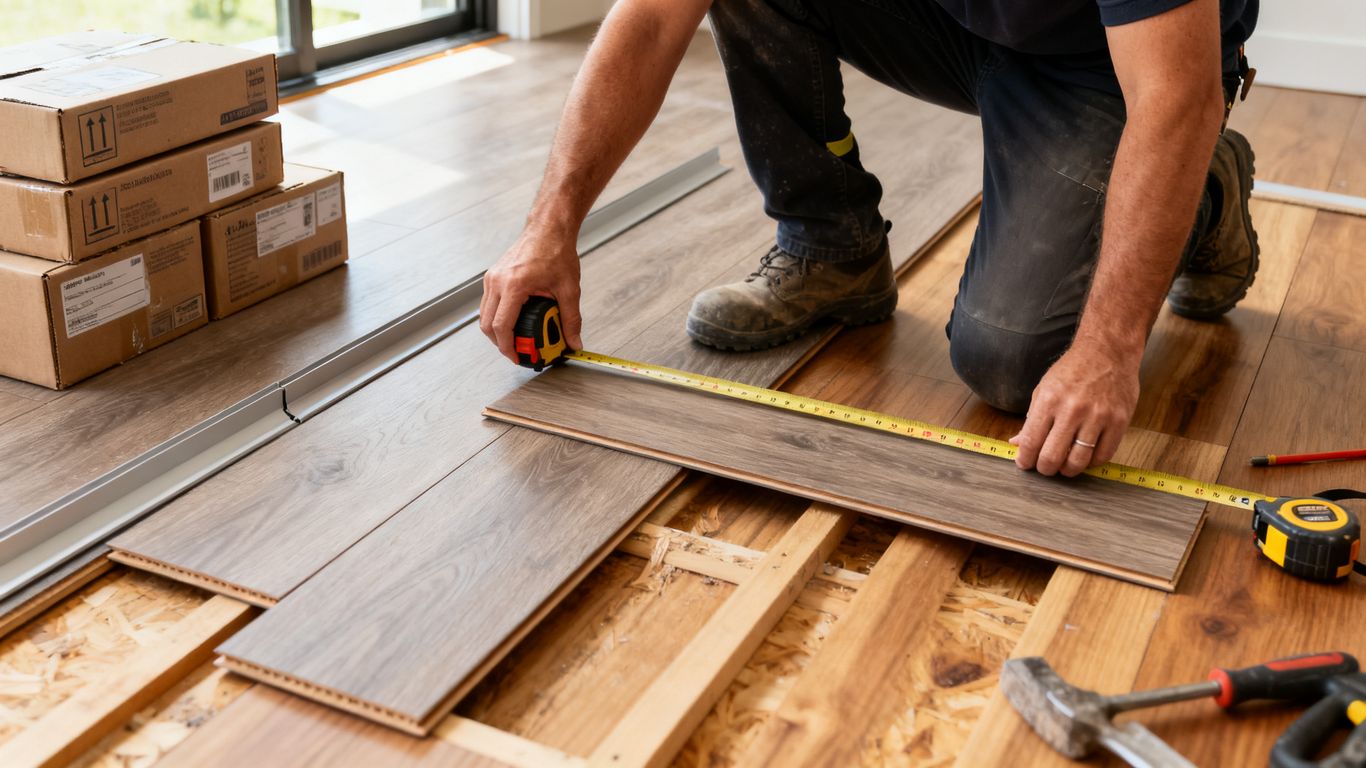
Installation is affected by the shape of the rooms, the number of doorways, furniture handling, and the condition of the existing floor. Removing old flooring may involve disposal and adhesive cleanup, while uneven concrete or damaged boards can require leveling or repairs before the new planks are laid.
Preparation is not an optional cosmetic extra. Rigid planks can telegraph significant high or low spots, and movement beneath the floor can place stress on joints. Have the installer identify preparation allowances separately so you know what is fixed and what may change after inspection.
Trims, transitions, delivery, and other extras
A complete quote should account for skirting or scotia work, stair nosings where relevant, doorway transitions, trims at exposed edges, delivery, and wastage. It should also state whether appliances need to be moved and whether doors will be trimmed for clearance.
These items can be small individually but meaningful across a full renovation. Ask for quantities and unit rates, not just one unexplained extras line. If you are comparing a product with a rigid core and click installation, confirm exactly which accessories and installation steps are included in the local quote.
How to evaluate quotes from local flooring suppliers
Read each quote for product name, plank dimensions, total area, wastage allowance, preparation assumptions, installation method, and warranty information. A clear document makes it easier to resolve differences before work begins and reduces the chance of an unexpected variation.
The right supplier should be willing to discuss both the attractive features and the limitations of the floor. Better Timber Flooring supplies and installs hybrid SPC along with other flooring products, so a conversation can focus on whether the material suits the home rather than on a single sales pitch.
Prepare your home for a successful installation
Good installation begins before the first plank is opened. The flooring should be stored and acclimatized according to the product instructions, and the installer should understand the condition of the subfloor rather than assuming it is ready. A little planning prevents many avoidable delays.
Clear access, agreed responsibilities, and a confirmed layout also make the installation day easier. Take photographs of existing services and finishes before work starts, particularly where old flooring will be removed.
Checking moisture levels and subfloor condition
Concrete, timber, and existing hard floors each need different checks. The subfloor should be clean, dry, stable, and within the flatness tolerance stated by the manufacturer. Moisture testing is especially important after recent building work, leaks, or cleaning that introduced substantial water.
Do not use the new floor to hide an unresolved damp problem. Ask for the results of relevant checks and clarify who is responsible for correcting a failed reading. This is a practical step, not unnecessary caution.
Measuring rooms and ordering the right amount
Measure each room separately, recording the longest and widest points rather than relying on a single rough dimension. Include cupboards or connected spaces only when the layout will run continuously, and allow for cuts around corners and fixed cabinetry.
A sensible allowance for waste depends on the room shape and installation pattern. Order from the same batch where possible and retain unopened cartons for future repairs. Keep the product name, batch details, and invoice with the maintenance information.
Planning expansion gaps and transitions
Floating floors need room to move at walls, fixed cabinetry, posts, and other vertical obstructions. The required gap varies by product and room size, so follow the installation guide rather than copying a measurement from another floor.
Before installation, decide where transitions will sit between rooms and materials. A short planning list can prevent last-minute compromises:
-
Confirm the direction of the planks through connected rooms.
-
Mark door centers and the intended transition positions.
-
Check clearance beneath doors and around appliances.
-
Agree how exposed edges, stairs, and skirtings will be finished.
Once those decisions are made, the installer can set out the floor with fewer surprises. It is much easier to adjust a layout on paper than after the first rows have been locked together.
Deciding between professional and DIY installation
Click systems can make SPC flooring appear straightforward, but successful installation still requires accurate cutting, careful set-out, and attention to subfloor tolerances. DIY may suit an experienced renovator with the right tools and time, especially in a simple room.
Professional installation is worth considering when the floor spans several rooms, includes stairs, requires extensive preparation, or must meet a specific warranty condition. Better Timber Flooring has over 50 years of experience in flooring and supplies and installs several flooring types, including hybrid SPC; that background can be useful when a project involves more than a simple rectangular room.
Find a reliable SPC flooring supplier and installer
A trustworthy supplier should make comparison easier, not more confusing. You should be able to obtain a physical sample, a written specification, clear warranty conditions, and an explanation of how the product will be installed in your particular home.
Experience matters, but it should be supported by straightforward communication. Look for someone who asks about the subfloor, sunlight, room use, and adjoining finishes before recommending a product.
Questions to ask Brisbane flooring companies
Ask who manufactures the product, what the core and wear layer are made from, and whether the backing is attached. Also ask who measures the rooms, who checks the subfloor, and what happens if preparation reveals a problem.
Clarify the installation method, expansion requirements, moisture limits, cleaning advice, warranty exclusions, and expected lead time. A local company should be able to explain how it handles Brisbane homes without making vague promises about every possible application.
How to assess samples, warranties, and certifications
Read the warranty for definitions of wear, fading, water exposure, and installation defects. Check whether the warranty applies only when an approved installer or specified underlay is used. Certifications and test reports are useful when they identify the product and the standard tested, rather than appearing as unexplained logos.
View samples in daylight and artificial light, and inspect the locking edge if possible. A product shown as a premium SPC flooring option still needs to be judged against its actual specification, local delivery arrangements, and installation requirements.
Reviewing installation experience and customer feedback
Look for reviews that discuss preparation, communication, finish quality, and how issues were handled—not only comments about how attractive the floor looked on completion day. Ask to see recent examples with similar room layouts or transitions.
A long history can be reassuring, but it should not replace a project-specific conversation. The installer should be comfortable explaining tolerances, expansion gaps, and the finish at doorways before asking you to approve the quote.
Warning signs of low-quality products or quotes
Be cautious when a quote gives only a square-meter price, omits the product’s technical details, or pressures you to pay before the subfloor has been inspected. Other warning signs include unclear warranty language, inconsistent measurements, and claims that no expansion allowance is necessary.
The cheapest option may still be suitable, but it should survive careful questions. If important information is missing, treat that uncertainty as part of the cost comparison rather than assuming it will be resolved later.
Maintain SPC flooring in Brisbane’s conditions
SPC flooring is relatively simple to care for, but a regular routine protects both the finish and the joints. Fine grit is often more damaging than a dramatic spill because it is repeatedly walked across the surface. Cleaning also needs to remove residue without leaving the floor overly wet.
Keep the care instructions supplied with the product, since finishes and warranties differ. Good maintenance is mostly consistent, sensible housekeeping rather than a collection of expensive products.
Everyday cleaning and recommended products
Use a soft broom, dust mop, or vacuum suitable for hard floors to remove grit. For routine damp cleaning, use a well-wrung mop and a cleaner approved for the specific flooring finish. Avoid flooding the floor, abrasive powders, waxes, and steam cleaning unless the manufacturer expressly permits them.
Clean spills promptly, especially near sinks, doors, and outdoor living areas. If a product leaves a sticky film, reduce the amount of cleaner and rinse according to the care instructions rather than adding more detergent.
Preventing scratches, dents, and stains
Felt pads beneath furniture, clean entrance mats, and lifting rather than dragging heavy items can make a noticeable difference. Replace worn pads and keep grit from collecting beneath chairs that move frequently.
Rubber-backed mats may discolor some floors, so check their suitability first. Wipe up oils, dyes, and strong cleaning chemicals quickly, and avoid using sharp tools directly on the surface when making household repairs.
Managing sunlight, humidity, and temperature changes
Use blinds, curtains, or other window coverings where strong direct sun falls on the floor for much of the day. Keep indoor conditions reasonably stable and deal with leaks quickly, particularly around exterior doors, bathrooms, and air-conditioning equipment.
Do not place high-heat appliances or fixtures directly against the floor without checking the product guidance. Normal seasonal changes are expected, but unusual heat, trapped moisture, or prolonged exposure can affect both appearance and movement.
Repairing damaged planks and preserving the warranty
Keep spare cartons in a dry, stable location so a damaged plank can be matched more easily later. Minor surface marks may respond to the manufacturer’s recommended repair method, while a badly damaged plank may need to be replaced rather than filled.
Before making a repair, photograph the issue and check the warranty instructions. Unauthorized sanding, coating, or adhesive work can make a later claim more difficult. If the damage is near a joint or appears to be linked to subfloor movement, have the cause assessed instead of treating only the visible mark.
Conclusion
Choosing the best SPC flooring Brisbane homeowners can rely on means looking past color and price to assess construction, performance, installation, and long-term care together. Compare complete specifications, prepare the subfloor properly, and work with a supplier who can explain the details in plain language. That process gives you a floor that looks right for the home and is better prepared for Brisbane’s changing conditions.
Frequently Asked Questions
Is SPC flooring suitable for Brisbane homes?
It can be suitable for many Brisbane homes because its rigid core and water-resistant construction handle ordinary household use well. The subfloor, installation conditions, sunlight, and room suitability still need to be checked.
Is SPC flooring completely waterproof?
The plank itself is commonly designed to resist water, but the complete floor is not automatically protected from leaks, standing water, damp subfloors, or poorly sealed edges. Follow the product’s application and installation instructions.
Is thicker SPC flooring always better?
Not necessarily. Core composition, wear layer, backing, locking system, subfloor preparation, and warranty conditions all contribute to performance. Compare the complete specification instead of choosing by thickness alone.
Can SPC flooring be installed over existing flooring?
Sometimes, provided the existing surface is stable, clean, dry, and sufficiently flat. The manufacturer’s instructions and an on-site subfloor assessment should determine whether the existing floor can remain.
How much waste should be ordered?
The allowance depends on room shape, layout, plank direction, and the number of cuts. A supplier or installer can calculate a more reliable amount after measuring the rooms and confirming the installation pattern.
How do you clean SPC flooring?
Regularly remove grit with a soft broom or suitable hard-floor vacuum, then use a well-wrung damp mop and an approved cleaner. Avoid abrasive products, excess water, and steam unless the product instructions allow them.
Can damaged SPC planks be replaced?
Individual planks can often be replaced, although the method depends on the locking system and the location of the damage. Keep spare boards and check the warranty before attempting repairs.