

Key Takeaways
The best timber flooring Australia offers is not one universal product. The right choice depends on species, construction, room conditions, household traffic, maintenance expectations, and the character you want underfoot.
- Australian hardwoods offer distinctive colour, grain, and natural variation.
- Blackbutt, Spotted gum, Tasmanian oak, and Jarrah each create a different visual mood.
- Engineered oak can provide a genuine timber surface with a more stable construction.
- Reclaimed timber brings history and irregularity, while bamboo and hybrid flooring offer alternatives to solid boards.
- Samples, installation advice, and a clear understanding of daily use matter as much as appearance.
1. Australian hardwood timber flooring
Australian hardwood timber flooring has a warmth that suits both heritage interiors and clean contemporary rooms. The boards may range from pale cream and honeyed gold through to deeper reds and browns, depending on the species and finish. Since timber is a natural material, colour and markings can vary from board to board, giving the completed floor a genuinely individual appearance.
At Better Timber Flooring, hardwood floorboards are part of a wider supply and installation offering that includes solid timber and engineered flooring. That makes it useful to compare construction as well as species: solid boards have a traditional feel, while engineered boards combine a hardwood surface with a layered core. For a broader look at colour variation, grain, and hardness, this Australian hardwood flooring guide provides helpful context.
Before choosing a colour, view several boards together in the kind of light your home receives. A small sample can hide the movement of grain or the contrast between boards. Also consider the room’s traffic, the desired finish, and whether the floor should quietly support the furniture or become the main visual feature.
2. Blackbutt timber flooring
Blackbutt timber flooring is often chosen for its light, welcoming appearance and relatively calm grain. Its warm straw and honey tones can make rooms feel open without appearing stark, while natural variations keep the surface from looking flat. It works especially well with neutral walls, woven textures, and furniture in timber, leather, or soft fabrics.
Its practical appeal comes from the balance between a bright colour palette and the everyday resilience expected of a hardwood floor. Still, no timber is maintenance-free: grit should be removed regularly, spills should be dealt with promptly, and felt protection under furniture can reduce scratching. The finish also influences how strongly the grain and small marks are seen.
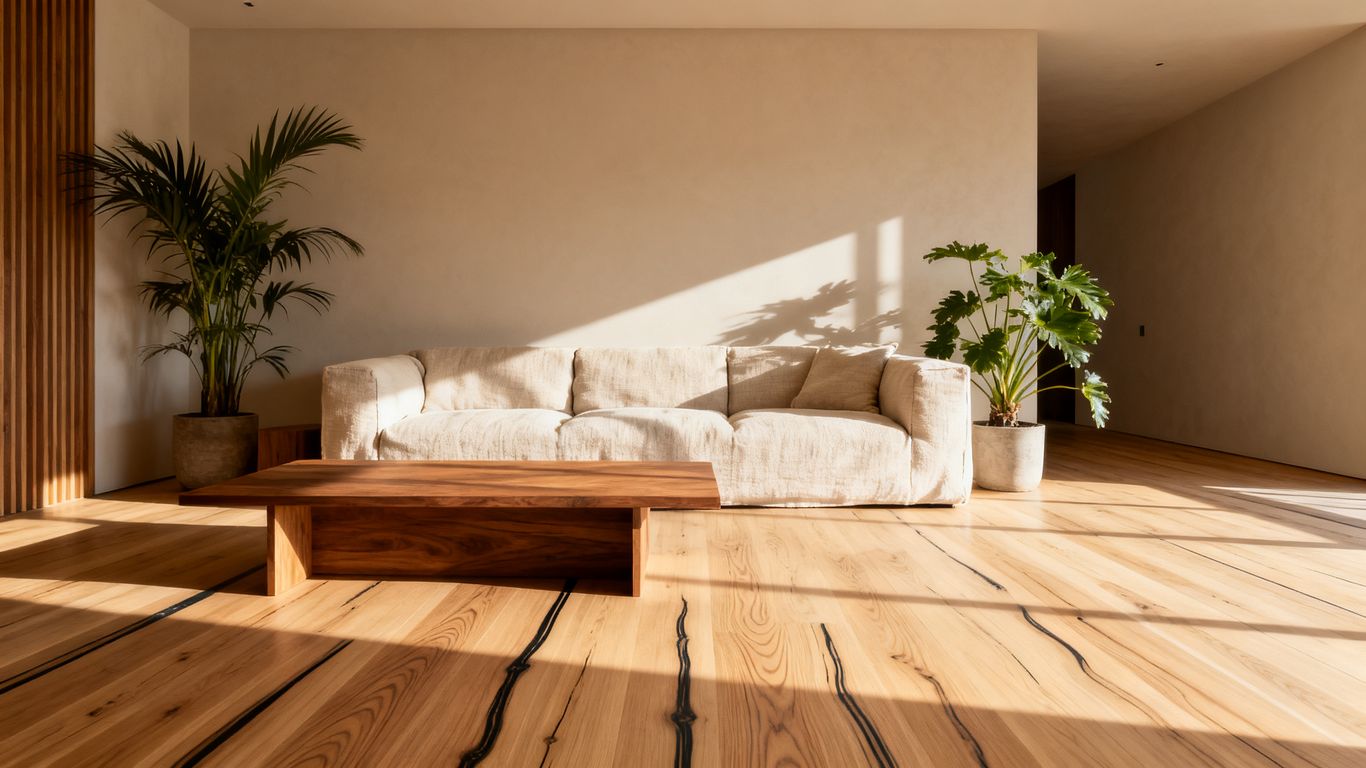
Blackbutt can suit open-plan living areas, hallways, and bedrooms, provided the construction and installation method match the building. Look at boards in daylight and evening light before committing, because warm lighting can make the timber appear more golden than it does in a showroom.
3. Spotted gum timber flooring
Spotted gum timber flooring has a more pronounced personality than many pale Australian species. Its colours can move through soft browns, honey tones, and richer earthy shades, with grain patterns and natural markings that add movement across a room. It is a strong option when the floor needs to feel substantial rather than visually quiet.
The timber’s character means board selection and layout deserve attention. Dramatic variation can be part of its appeal, but it may look different from a single display plank or small sample. Ask to see a broader selection, and consider how the boards will sit alongside cabinetry, stone, paint colours, and large areas of glass.
Spotted gum can work in modern coastal homes, renovated cottages, and more formal interiors. A matte or low-sheen finish generally allows the natural grain to remain the focus, while a carefully chosen stain can shift the overall impression. The best result is usually one that works with the species rather than trying to conceal it.
4. Tasmanian oak timber flooring
Tasmanian oak timber flooring is valued for its light, adaptable appearance. Its tones can sit between pale cream, soft beige, and warm golden brown, making it easy to coordinate with many interior schemes. The relatively gentle visual effect suits homes where the floor should add warmth without dominating the room.
Tasmanian oak can be a thoughtful choice for homeowners who want natural timber but prefer a more restrained grain. Even so, variation remains part of the material, and boards may differ in tone and figure. Reviewing multiple samples is the best way to understand the range you may see after installation.
Its versatility makes it suitable for bedrooms, living rooms, dining spaces, and corridors. Pair it with white or muted cabinetry for a bright finish, or use darker furniture and textured fabrics to create more contrast. The construction, finish, and installation details still need to be considered alongside the species name.
5. Jarrah timber flooring
Jarrah timber flooring brings a deeper, richer presence than the lighter Australian hardwoods in this list. Its red-brown and earthy tones can give a room a grounded, established feeling, particularly when paired with cream walls, natural stone, or restrained furnishings. It is often selected by people who want the floor to contribute strong colour as well as texture.
Because Jarrah has a distinctive appearance, it is worth thinking about the room as a whole before choosing it. Darker floors can make a space feel intimate, but they may also show dust more readily than pale boards. Lighting, wall colour, room size, and the amount of natural daylight all affect the final impression.
A clear finish can preserve the timber’s depth, while a more muted finish may create a quieter contemporary look. Whichever direction you take, allow the natural variation to remain visible. A floor with different tones across the boards often feels more authentic than one made to look perfectly uniform.
6. Oak engineered timber flooring
Oak engineered timber flooring combines a real oak surface with a layered construction, making it a popular alternative to solid boards. The visible timber still provides grain, warmth, and natural variation, while the engineered format can offer practical flexibility in modern homes. It is particularly useful when the design calls for wide boards or a contemporary finish.
When comparing products, look beyond the oak label and examine the details that affect the finished floor. The following points provide a useful starting framework.
| Feature to compare | Why it matters | What to review |
|---|---|---|
| Surface layer | Influences appearance and future finishing options | Timber species, thickness, and grade |
| Core construction | Affects dimensional stability | Layer arrangement and manufacturing quality |
| Board profile | Influences installation and visual rhythm | Width, length, edges, and joining system |
| Finish | Changes colour, texture, and maintenance | Matte, brushed, oiled, or lacquered surface |
At Better Timber Flooring, engineered timber flooring is one of the product categories supplied and installed by the company. That documented focus fits homeowners who want genuine hardwood floorboards while comparing a construction designed for contemporary interiors. Samples remain essential, since oak can look distinctly different with a pale, smoked, brushed, or natural finish.
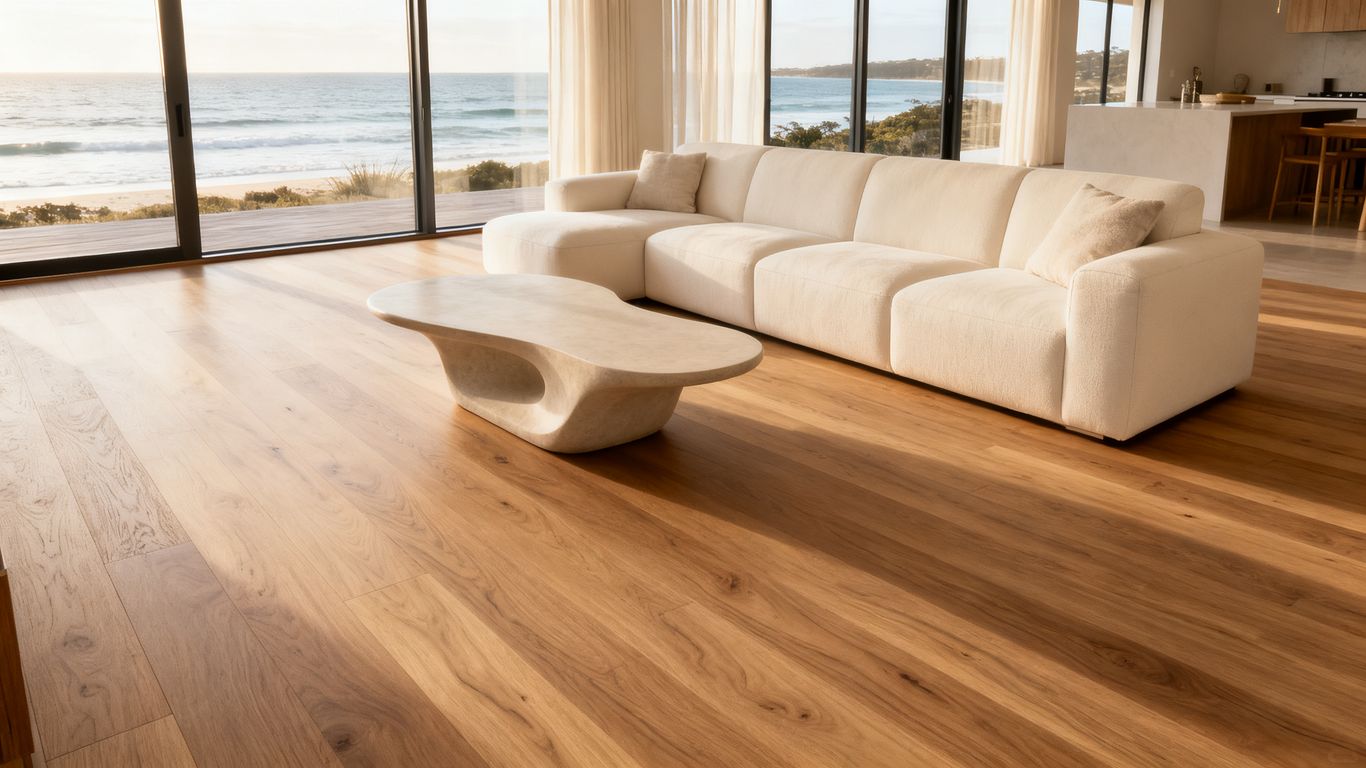
Oak is not automatically the best choice for every room. Consider moisture exposure, subfloor condition, direct sunlight, pets, furniture, and the level of care you are prepared to provide. A good floor is one whose construction and finish suit the home, not merely one that looks attractive in a photograph.
7. European oak timber flooring
European oak timber flooring is known for its expressive grain and broad range of finishes. Depending on the grade and treatment, it can appear pale and understated, warm and honeyed, or richer and more weathered. Its visible knots and natural markings can add a relaxed, lived-in quality to both traditional and contemporary rooms.
The appeal of European oak often lies in how readily it can be tailored. Board width, surface texture, edge detail, colour, and sheen all change the character of the finished floor. A wire-brushed or lightly textured surface may feel casual, while a smoother and more even grade can look refined.
For a fair comparison, place samples beside your joinery, benchtop, and paint selections. European oak can shift noticeably under warm artificial light, and a finish that looks subtle in a showroom may read more strongly across a large open-plan area. Decide whether you want the floor to blend, contrast, or anchor the scheme.
8. Reclaimed timber flooring
Reclaimed timber flooring offers a surface with visible history rather than a freshly uniform appearance. Old nail marks, weathering, tonal changes, and irregular grain can create depth that is difficult to reproduce convincingly with a new finish. It suits interiors where authenticity and texture matter more than a perfectly consistent board pattern.
The reclaimed category can vary widely, so ask practical questions before purchasing. The source, previous use, moisture condition, board dimensions, and preparation process all affect what you receive. The floor also needs to be assessed in relation to the subfloor and the installation conditions of the home.
A short checklist can keep the decision grounded:
- Confirm the boards have been properly dried and prepared.
- Ask how defects, old fastener marks, and uneven edges will be handled.
- Check whether the proposed finish suits the timber’s existing character.
- Allow for variation in board width, tone, and surface texture.
Those irregularities are not necessarily faults; they are part of the material’s appeal. However, reclaimed timber should still be installed with care, and the finished result should meet your expectations for comfort, stability, cleaning, and everyday use.
9. Bamboo flooring with a timber look
Bamboo flooring with a timber look is an alternative for homeowners who want a warm, board-like appearance without selecting a conventional hardwood species. Its visual result depends on the manufacturing process, colour, surface texture, and board format. Some options are quiet and pale, while others are darker or designed to imitate a more traditional timber grain.
Bamboo is not timber, so it should be assessed on its own terms rather than treated as an identical substitute. Ask about the product’s construction, finish, moisture guidance, installation requirements, and care instructions. These details will influence how well it suits kitchens, living spaces, bedrooms, and other parts of the home.
The right bamboo floor is one that fits both the design brief and the practical conditions. Compare samples in natural light, check how the surface feels underfoot, and consider whether the pattern looks convincing at the scale of the room. A calm, well-matched finish will usually age more gracefully than a highly artificial imitation.
10. Hybrid flooring with a timber finish
Hybrid flooring with a timber finish is designed for people who want a wood-inspired appearance alongside a different construction from solid or engineered timber. It can be a useful option when installation needs, moisture considerations, or maintenance preferences make a hybrid product worth investigating. The decorative layer provides the visual impression, while the underlying build influences feel and performance.
At Better Timber Flooring, hybrid SPC flooring is included among the flooring products supplied and installed. That makes it one category to compare alongside timber, engineered, laminate, and recycled options rather than assuming every room needs the same material. Product specifications, installation conditions, and care instructions should guide the final choice.
Look closely at the plank proportions, printed grain, texture, joins, and transition details. A convincing timber finish depends on more than colour alone, especially across a large floor. For households weighing appearance against everyday practicality, hybrid flooring can deserve a place in the shortlist, provided its documented requirements suit the project.
Conclusion
Choosing among the best timber flooring Australia options means balancing natural character with construction, room conditions, budget, and maintenance. Australian hardwoods bring local colour and grain, oak offers adaptable engineered formats, reclaimed boards add history, and bamboo or hybrid products provide different routes to a timber-inspired interior. Take samples home, ask detailed installation questions, and choose the floor that will remain comfortable and convincing in everyday life.
Frequently Asked Questions
Which timber flooring is best for busy homes?
A suitable choice depends on traffic, pets, moisture exposure, finish, and maintenance habits. Compare the species, construction, surface finish, and installation requirements rather than relying on species name alone.
Is engineered timber better than solid timber?
Neither is universally better. Engineered timber can offer a layered construction and design flexibility, while solid timber provides a traditional board format. The right option depends on the subfloor, room conditions, project design, and future maintenance plans.
Is Blackbutt suitable for open-plan living areas?
Blackbutt can suit open-plan spaces because its light, warm appearance works with many interior schemes. Confirm the product construction, finish, installation method, and care requirements before using it across a large connected area.
Does Jarrah make a room look smaller?
Its deeper colour can make a room feel more intimate, particularly when combined with dark walls or limited daylight. Lighter walls, thoughtful lighting, and restrained furnishings can help balance the richer tone.
How should reclaimed timber be assessed?
Check its moisture condition, preparation, source, board dimensions, surface defects, and proposed finish. Variation is part of reclaimed timber’s character, but the boards should still be suitable for the subfloor and intended use.
Can bamboo flooring look like real timber?
Bamboo can provide a warm, board-like appearance, but it is a different material from timber. Review samples closely and compare the grain pattern, texture, construction, finish, and care instructions before deciding.
What should I check before ordering a timber floor?
Confirm the product construction, species or visual finish, board dimensions, installation requirements, subfloor condition, moisture guidance, maintenance routine, and expected natural variation. Viewing several samples in your home is also worthwhile.