

Key Takeaways
Buying engineered wood floors Australia-wide becomes easier when you compare construction, installation, climate suitability, and total cost rather than judging boards by appearance alone.
- Check the board construction and wear layer before comparing prices.
- Budget for installation, delivery, subfloor preparation, and future care.
- Choose the finish, dimensions, and colour to suit the room and lifestyle.
- Confirm moisture limits, acclimatisation instructions, and heating compatibility.
- Use samples, written warranties, and clear product documentation to assess suppliers.
Understand what engineered wood flooring is
Engineered wood flooring uses a genuine timber surface fixed to a layered timber base. It is still real wood, but its construction is designed to reduce some of the movement associated with a solid timber board. That makes it a practical option for many Australian renovations, provided the product and installation method suit the room.
How engineered wood differs from solid timber
Solid timber boards are made from one continuous piece of wood, while engineered boards combine a hardwood top layer with supporting timber layers. This layered structure can make the board more dimensionally stable as temperature and humidity change. It does not make the floor immune to moisture, poor installation, or careless cleaning, so the site still matters.
The construction layers and wear layer thickness
The visible hardwood layer is usually called the wear layer or veneer. Beneath it, cross-laid timber or plywood layers provide support, while the board edges are shaped with a tongue-and-groove or click connection. A thicker wear layer may allow more future refinishing, but the manufacturer’s instructions should determine whether sanding is permitted and how much material can be removed.
Common timber species, finishes, and plank formats
Oak is widely chosen for its varied grain and adaptable colour, while blackbutt, spotted gum, walnut, and other species create different densities, tones, and visual character. Boards may be smooth, brushed, distressed, or lightly textured, with oil, lacquer, or factory-applied matte finishes. Standard planks are not the only format; wide boards, long boards, herringbone, and chevron patterns each change the room’s scale and installation cost.
Where engineered flooring works best in Australian homes
Engineered flooring can suit living rooms, bedrooms, hallways, studies, and open-plan areas where a warm timber surface is wanted. Kitchens require careful moisture management, especially around sinks and dishwashers, while bathrooms and persistently damp areas commonly need a different flooring solution. A useful engineered timber flooring range can show how species, formats, and surface treatments vary before you order samples.
Set your budget and compare total costs
The board price is only one part of a flooring budget. A realistic estimate also includes preparation, installation, trims, transitions, delivery, waste, and removal of an existing floor where needed. Get an itemised quotation so a low square-metre price does not conceal a more expensive finished result.
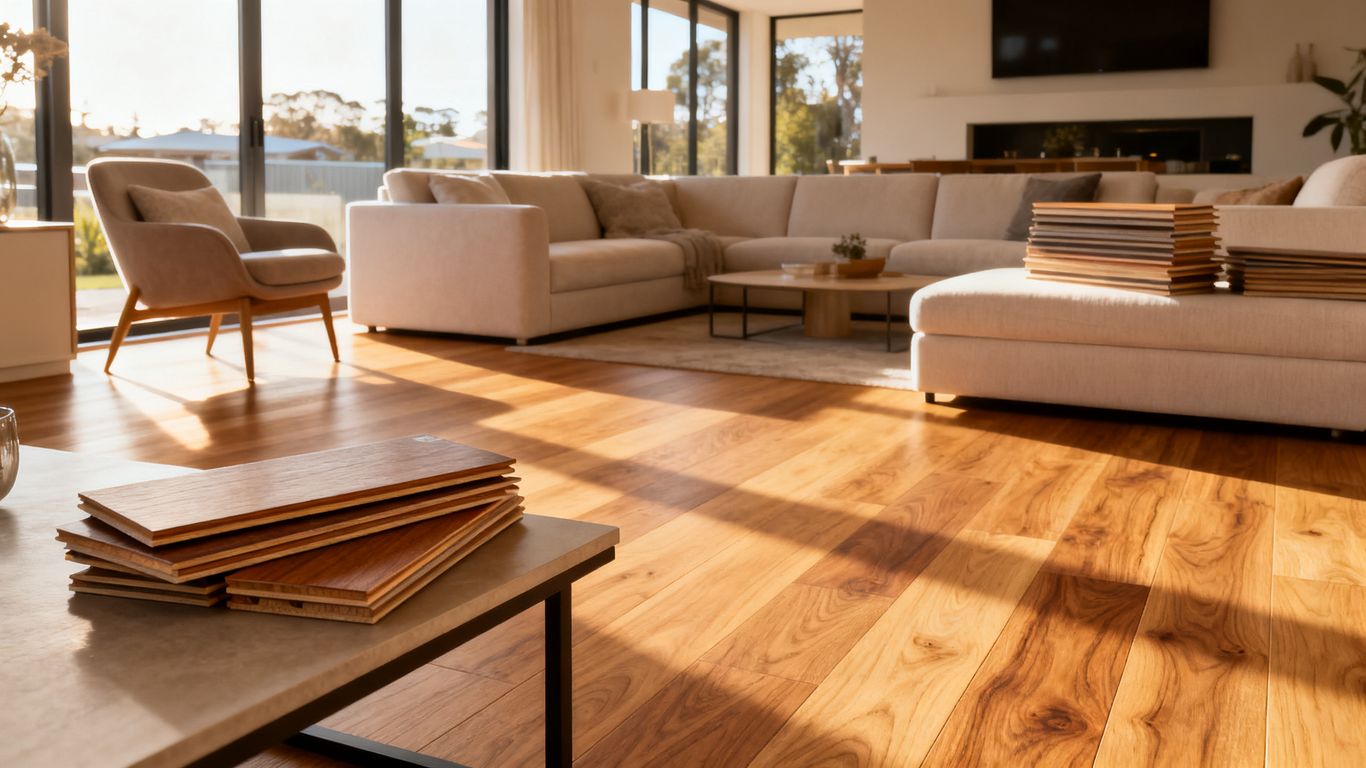
Typical flooring prices per square metre
Prices vary substantially with timber species, grade, dimensions, finish, construction, and pattern. Entry-level products may use shorter boards or a thinner visible layer, while premium ranges often offer more consistent grading, wider formats, and carefully developed finishes. Treat online prices as a starting point and check whether they include GST, delivery, trims, or installation.
Installation, underlay, delivery, and removal costs
Floating installation may reduce adhesive use, but it still requires a suitable underlay and a properly prepared subfloor. Glue-down installation adds adhesive and labour considerations, and both methods may require door trimming, skirting adjustments, levelling, or moisture testing. Removal and disposal can be significant in older homes, particularly where tiles, glued boards, or uneven substrates are involved.
How plank size and timber species affect pricing
Longer and wider boards generally use more carefully selected material and can be harder to handle on site. Decorative patterns require more planning and cutting than a straightforward parallel layout, so allow for additional waste. Timber species, grade, knots, colour variation, and the complexity of the factory finish also influence the final price.
When premium flooring offers better long-term value
A premium floor can be worthwhile when it provides the dimensions, appearance, finish, or documented performance you actually need. It is less useful to pay extra for a feature that will be hidden by rugs or compromised by an unsuitable subfloor. Better Timber Flooring supplies and installs engineered timber flooring, so a conversation about the complete installed cost can be more useful than comparing boards alone.
To compare quotes fairly, ask each supplier to state whether these items are included:
- Site measurement and subfloor assessment.
- Underlay, adhesive, trims, and transition profiles.
- Delivery, floor preparation, and removal of existing materials.
- Installation labour, waste allowance, and final clean-up.
Once these lines are visible, you can see whether a higher board price is balanced by fewer extras or better installation support. The cheapest quote is not necessarily the lowest-cost floor if preparation has been omitted.
Choose the right flooring specifications
Appearance matters, but specifications determine how the floor will behave and how it can be maintained. Start with the demands of each room, then narrow the choice by finish, format, colour, and texture. Ordering samples is especially helpful because timber can look noticeably different in daylight, warm artificial light, and beside existing cabinetry.
Selecting a suitable wear layer for each room
A thicker wear layer can provide more scope for future maintenance, but it is not the only measure of durability. Foot traffic, pets, furniture, sunlight, and the chosen finish all affect how a floor ages. Ask for the actual wear-layer measurement, the permitted maintenance process, and the relevant residential or commercial use guidance rather than relying on broad labels.
Comparing finishes such as matte, oil, and lacquer
Matte finishes tend to minimise glare and can give boards a softer, more natural appearance. Oil finishes may highlight grain and can often be maintained with compatible care products, while lacquer forms a surface film that may be easier to wipe clean but can show wear differently. The finish should be considered alongside repairability, cleaning instructions, and the amount of traffic the room receives.
Choosing plank widths, lengths, and surface textures
Wide, long boards can make a spacious room feel calmer, though they need a sufficiently flat and stable substrate. Narrower boards may suit smaller rooms or a more traditional interior. Smooth surfaces feel refined, wire-brushed textures add definition, and distressed finishes can disguise small marks, but texture may also hold more dust and require a thoughtful cleaning routine.
Matching colour and grain to your interior style
Pale timber can keep a compact room feeling light, while mid-tones often offer a flexible balance between warmth and contrast. Darker boards create drama but may reveal dust and scratches more readily. Look at several boards together rather than choosing from one small sample, because natural variation in grain, knots, and colour is part of the character of real timber.
Check Australian climate and installation requirements
Australian homes experience different humidity, heat, rainfall, and coastal conditions, so flooring should be selected for the actual site rather than the postcode alone. The building’s ventilation, drainage, slab condition, and exposure to direct sunlight also influence performance. Good installation begins with measuring and preparing the space, not simply opening cartons on the day work starts.
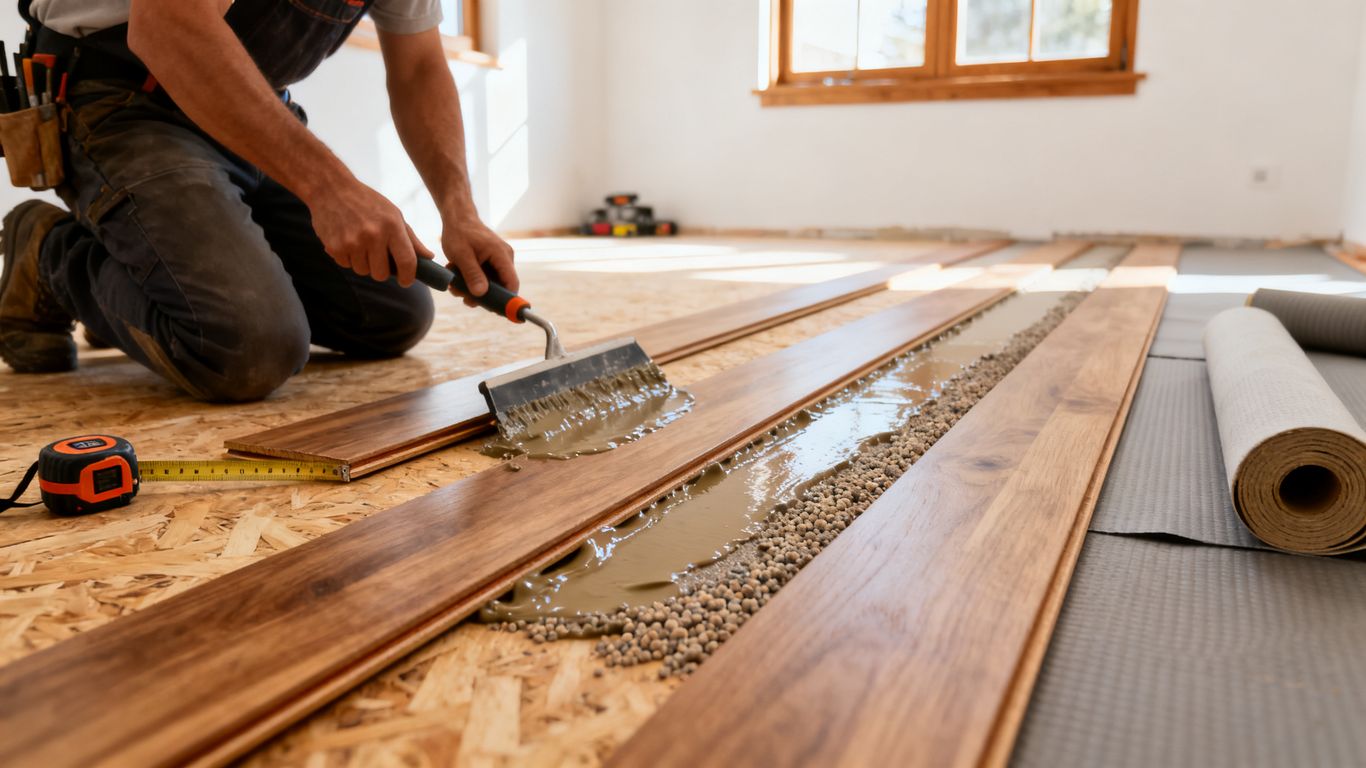
Managing humidity, moisture, and seasonal movement
Wood responds to moisture in the air and in the substrate by expanding and contracting. Keep wet areas protected, deal with leaks promptly, and ask for moisture testing before installation over a concrete slab. Expansion gaps at walls and fixed objects allow normal movement, while suitable trims conceal those gaps without pinning the floor in place.
Choosing between floating and glue-down installation
A floating floor is fitted over underlay without being bonded across the whole substrate, which can make it efficient in some renovation settings. Glue-down flooring is fixed directly to a prepared base and may be preferred where acoustic, thermal, or layout considerations call for a more solid feel. The board manufacturer, room size, subfloor, and installer should guide the decision.
Preparing subfloors for a stable result
The subfloor should be clean, dry, sound, and within the manufacturer’s stated flatness tolerance. Uneven areas may need grinding, patching, or levelling, while loose boards and damaged sections should be repaired before new flooring arrives. Check door clearances, skirting details, transitions, and the direction of natural light as part of the preparation rather than leaving them to the final stage.
Understanding compatibility with underfloor heating
Some engineered boards can be used over underfloor heating, but compatibility is product-specific. Confirm the permitted system, maximum surface temperature, moisture limits, installation method, and commissioning procedure in writing. Heating should be brought up and down gradually according to the instructions, since sudden changes can increase stress on timber.
Assess suppliers and product quality
A supplier should make it straightforward to understand what you are buying and how it should be installed. Look for clear technical information, realistic samples, responsive answers, and a quotation that separates materials from labour. Experience is valuable, but it should be matched by current documentation for the particular product selected.
What to look for in Australian flooring suppliers
Ask whether the supplier can arrange site assessment, installation, and aftercare guidance, and whether those services are handled directly or by separate contractors. Better Timber Flooring has more than 50 years of experience and supplies and installs engineered timber flooring as part of a broader flooring service. That kind of background can be useful when a project involves unusual subfloors, renovations, or several flooring types.
Certifications, timber sourcing, and sustainability claims
Sustainability statements should be specific enough to verify. Ask where the timber was sourced, what chain-of-custody or environmental documentation applies, and whether claims refer to the timber, the finish, the adhesive, or the complete board. Recycled content and responsible sourcing are separate questions, so avoid assuming one from the other.
Warranties, samples, and product documentation
Read the warranty before ordering, paying attention to exclusions for moisture, installation, commercial use, fading, and cleaning products. A sample should be large enough to show variation, and the product sheet should state board dimensions, construction, finish, installation method, and maintenance requirements. Keep the invoice, batch details, and installation records in case advice or replacement boards are needed later.
Questions to ask before ordering online or in store
Ask how much waste is recommended, whether the quoted price includes delivery, and whether the same batch can be supplied for the whole project. Confirm lead time, storage conditions, return rules, and who is responsible for checking the product before installation. If you are comparing online listings, remember that photographs rarely show the full range of natural colour and grade variation.
Plan installation and ongoing maintenance
The floor’s service life depends on what happens after purchase as much as on the board itself. Installation should follow the product instructions, and the room should be protected from trades, grit, standing water, and heavy furniture while the work settles. A simple maintenance plan is easier to keep than an occasional aggressive clean.
Deciding between professional and DIY installation
DIY may be realistic for an experienced renovator working with a forgiving layout and a clearly documented click system. Professional installation is often the safer choice for glue-down floors, large areas, complex patterns, stairs, uneven substrates, or rooms that connect to existing flooring. Before choosing, assess not only fitting skill but also subfloor testing, cutting accuracy, expansion details, and responsibility for warranty compliance.
Allowing for acclimatisation and expansion gaps
Follow the manufacturer’s instructions for acclimatisation rather than assuming every product needs the same number of days. Cartons may need to be stored flat in the installation environment, away from damp walls and direct heat. Leave the specified perimeter gaps around walls, cabinetry, columns, and pipes, then use suitable trims or skirting to finish the edges.
Cleaning products and routines for engineered wood floors
Remove loose grit regularly with a soft brush, suitable vacuum head, or dry microfibre mop. Clean spills promptly and use only a compatible product applied sparingly; excessive water can enter joints and contribute to swelling or finish damage. A care guide such as engineered floor maintenance advice can help you compare cleaning routines, but the flooring manufacturer’s instructions should take priority.
Repairing scratches, dents, and surface wear
Small marks may respond to a manufacturer-approved maintenance product, colour-matched repair wax, or careful touch-up, depending on the finish. Felt pads, entrance mats, and lifting rather than dragging furniture prevent many avoidable dents. For deeper damage, ask whether an individual board can be replaced or whether the surface can be professionally renewed; do not sand through the wear layer without specialist advice.
Conclusion
The right engineered timber floor balances construction, appearance, installation conditions, budget, and the realities of daily life. Compare complete installed costs, inspect samples in your home, confirm climate and heating requirements, and choose a supplier that can explain both the product and the process clearly.
Frequently Asked Questions
Is engineered wood flooring suitable for Australian homes?
Yes, it can suit many Australian homes when the board, installation method, subfloor, and room conditions are compatible. It should still be protected from persistent moisture and installed according to the manufacturer’s requirements.
Is engineered flooring better than solid timber?
Neither is universally better. Engineered flooring can offer greater dimensional stability and more flexible installation options, while solid timber may appeal to buyers who want a thicker continuous timber board with particular refinishing possibilities.
Can engineered wood flooring be installed in a kitchen?
It can be used in some kitchens, but spills must be cleaned promptly and wet-area detailing must be carefully managed. Check the product warranty and installation instructions before making a selection.
How much does engineered wood flooring cost?
The total depends on the board, timber species, format, installation method, subfloor preparation, delivery, trims, waste, and removal of existing flooring. An itemised local quotation is more useful than a board-only price.
Can engineered wood flooring go over underfloor heating?
Some products are compatible, but the answer depends on the specific board and heating system. Confirm maximum temperatures, moisture limits, installation method, and commissioning instructions in the product documentation.
How should engineered wood floors be cleaned?
Remove grit regularly, wipe spills quickly, and use a lightly damp compatible mop rather than flooding the floor. Avoid harsh chemicals, steam, and unapproved products unless the manufacturer specifically permits them.
How long can engineered wood flooring last?
Its life depends on construction, wear layer, traffic, moisture control, finish, installation quality, and maintenance. Good care and timely repairs can help preserve the surface, while severe damage may require board replacement or professional restoration.